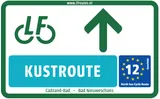
LF Kustroute ( EuroVelo 12 - Netherlands)
Plan, record and navigate on the go
All routes and points of interest in your pocket — with the free VeloPlanner app.


The LF Kustroute (LF Coastal Route) follows the Dutch coast from Cadzand-Bad on the Belgian border to Bad Nieuweschans on the German border. It forms the Dutch part of EuroVelo 12, the North Sea Cycle Route.
The southern and central sections are defined by long stretches of dunes, both on the mainland coast and on the Zeeland and South Holland islands, with small seaside resorts and historic towns as stopping points. The route also crosses Delta Plan dams and passes through two major industrial landscapes: the port of the Maasvlakte and the North Sea Canal. North of Den Helder the character changes. Along the Wadden Sea you ride through one of the quietest and most sparsely populated parts of the Netherlands, past mound villages built on terps, salt marshes and bird reserves.

LF Kustroute at a glance
- Start and end: Cadzand-Bad (Belgian border) to Bad Nieuweschans (German border)
- Duration: 11 days following the operator's daily stages
- Elevation: mainly flat along the Frisian Wadden coast
- Direction: the official route description runs south to north and east, from Cadzand-Bad to Bad Nieuweschans
- Ferries: several crossings are part of the route, including Breskens–Vlissingen and the Hoeksveer between the Maasvlakte and Hoek van Holland
- Permits: a dune pass is required for adults in the North Holland Dune Reserve
- Network: Dutch section of EuroVelo 12 (North Sea Cycle Route)
When to cycle the LF Kustroute
Timing matters on this route for two reasons: ferry operations and wildlife. The Hoeksveer between the Maasvlakte and Hoek van Holland runs only in the high season, and even then with a limited number of departures per day. Outside that period you follow an alternative route published by the route operator. The dune sections near Noordwijk can be busy with beachgoers in summer, while early mornings and the off-season are much quieter.
- Spring: the flower fields inland from Noordwijk are reachable via a short detour
- Spring and autumn: up to 30,000 barnacle geese a day pass over Lauwersmeer National Park
- Summer: the Hoeksveer operates, with limited daily departures
- Seals: grey seals are easiest to spot during nursing in December and moulting in March–April; common seals in June (nursing) and August (moulting)

LF Kustroute stages from Cadzand-Bad to Bad Nieuweschans
The route operator divides the LF Kustroute into 11 daily stages. They follow the coast from the Zwin at the Belgian border through Zeeland, South Holland and North Holland, then along the Wadden Sea through Friesland and Groningen.
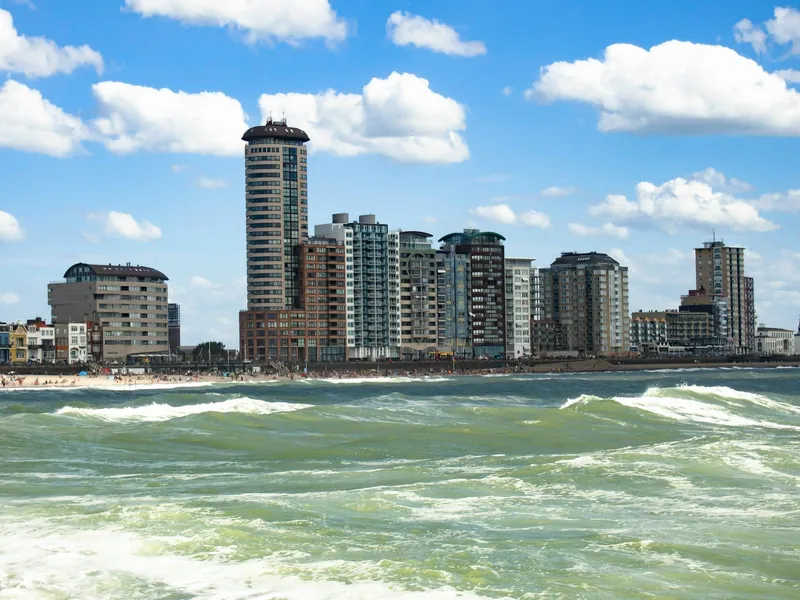
Cadzand-Bad – Vlissingen
The route begins at a viewpoint in the Zwin Nature Park, right on the Belgian border. In Zeelandic Flanders you ride along the North Sea coast, often close to the beach. At Breskens a pedestrian ferry takes you across to Walcheren, the first Zeeland island.
Vlissingen – Burgh-Haamstede
The Westkapelle sea dike leads to Domburg, the oldest seaside resort on Walcheren and a former artists' colony. You then cross the Oosterscheldekering, a 9-kilometre storm surge barrier, to Schouwen-Duiveland.
Burgh-Haamstede – Oostvoorne
This stage goes through the Westerschouwen Forest, the largest forest in Zeeland, set in dunes with sand drifts, valleys and dune meadows. After the beaches up to the Brouwersdam, you continue via Goeree-Overflakkee into South Holland and the Natura 2000 dunes of Voorne-Putten.
Oostvoorne – Noordwijk
Between the sea and Lake Oostvoorne the landscape switches abruptly to the Maasvlakte, with warehouses, containers and pylons in one of the largest ports in the world. The Hoeksveer crosses to Hoek van Holland, after which a long dune section leads north to Noordwijk.
Noordwijk – Egmond
The route runs through the Amsterdam Water Supply Dunes, then along the inner dune edge of Zuid-Kennemerland National Park between Zandvoort and IJmuiden, with old dunes, beach ridges, woodland and country estates. A ferry crosses the industrial North Sea Canal, and the North Holland Dune Reserve follows. Adults need a dune pass here.
Egmond – Den Helder
The coast gets quieter towards the northern tip of the mainland. You pass the Schoorl Dunes, the highest dunes in the Netherlands at over 55 metres, and ride through the Hondsbossche Dunes between Camperduin and Petten, one of the country's newest nature reserves.
Den Helder – Harlingen
From the naval town of Den Helder the route crosses the Amstelmeer to Wieringen, an island until 1930. At Den Oever you ride onto the 32-kilometre dike that separates the Wadden Sea from the IJsselmeer, reaching Friesland on the far side.
Harlingen – Holwerd
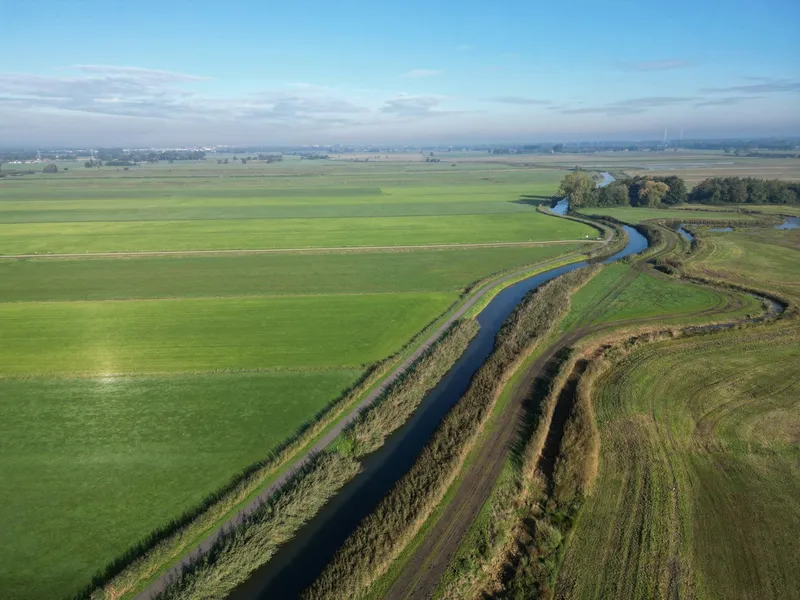
Harlingen is the port for boats to Vlieland and Terschelling. The route then winds along the flat, quiet Frisian north coast, past terp villages and the salt marshes of Noard-Fryslân Bûtendyks between Zwarte Haan and Holwerd.
Holwerd – Ulrum
At Holwerd a side road leads to the Ameland ferry terminal, which reaches far into the Wadden Sea. The stage continues through Lauwersmeer National Park, past Lauwersoog, the departure point for Schiermonnikoog, and the salt marsh of Hoek van de Bant.
Ulrum – Delfzijl
Arable farmland dominates, with churches standing on wierden (the Groningen term for terps). Wading birds such as oystercatchers, knots and redshanks are common, and seals can often be seen from the Wadden Sea dike.
Delfzijl – Bad Nieuweschans
Past Delfzijl you pass the cemetery of Oterdum, all that remains of a demolished village. From Termunten the route reaches the Punt van Reide peninsula at the edge of the Dollard, then follows it to the finish in Bad Nieuweschans.
What to see along the LF Kustroute
The highlights fall into three groups: protected coastal nature, the engineering that keeps the sea out, and the history of towns and villages shaped by the water.

Nature and wildlife
- Zwin Nature Park: 333 hectares at the Belgian border, including 120 hectares of new nature created by the Netherlands and Belgium between 2016 and 2019, bird breeding islands, tree frog ponds and four viewpoints
- Westerschouwen Forest: Zeeland's largest forest, in a dune landscape
- Voorne-Putten dunes: a Natura 2000 area just before the Maasvlakte
- Dunes north of Hoek van Holland: home to some 6,800 plant and animal species
- Zuid-Kennemerland National Park: old dunes, beach ridges, forest and estates between Zandvoort and IJmuiden
- North Holland Dune Reserve: oak woodland, wet and dry dune valleys and dune tops
- Schoorl Dunes: the highest dunes in the Netherlands
- Hondsbossche Dunes: newly created nature between Camperduin and Petten
- Noard-Fryslân Bûtendyks: one of Europe's largest salt marsh areas
- Lauwersmeer National Park: breeding white-tailed eagles, spoonbills, avocets and wild orchids
- Hoek van de Bant: salt marsh with a view from the Wadden Tribune
Water engineering and industry
- Oosterscheldekering: the largest structure of the Delta Plan, built after the 1953 flood that killed many people in Zeeland
- Maasvlakte: part of one of the world's largest ports
- Den Oever dike: 32 kilometres dividing the Wadden Sea from the IJsselmeer, the former Zuiderzee
History and culture
- Domburg: former artists' colony linked to Jan Toorop, Piet Mondrian and the poet J.C. van Schagen; the Marie Tak van Poortvliet Museum shows work from that period alongside modern art
- Den Helder: home base of the Royal Netherlands Navy since the early 19th century
- Wieringen: a Wadden island until the Wieringermeer was reclaimed in 1930
- Frisian terps: dwelling mounds built from around the year 100 to stay above the floods
- Oterdum cemetery: the last trace of a village that was demolished and never rebuilt
- Bad Nieuweschans: founded as a fortress, then called Langeakkerschans, during the Eighty Years' War
Wadden island side trips
- Vlieland and Terschelling: boats from Harlingen
- Ameland: ferry from Holwerd
- Schiermonnikoog: car-free island, ferry from Lauwersoog

Practical considerations for the LF Kustroute
Two things need planning before you set off: ferries and the dune pass. Missing either can cost you hours or force a detour.
Ferries are part of the route. You cross by pedestrian ferry at Breskens–Vlissingen, by the Hoeksveer between the Maasvlakte and Hoek van Holland, and by ferry over the North Sea Canal. Check current sailing times on veerponten.nl before each day's ride. The Hoeksveer needs the most attention: it has few departures in high season and does not run at all in the off-season, when an alternative route applies.
A dune pass is mandatory in the North Holland Dune Reserve for everyone aged 18 and over. Details are available from the reserve manager, PWN.
- The GPX track for the full route is available directly in VeloPlanner
- Island ferries leave from Harlingen, Holwerd and Lauwersoog if you want to add a Wadden island
- Summer brings crowds to the dunes and beaches of South Holland; start early for quieter riding
Final tips for cycling the LF Kustroute
Plan around the ferries first, especially the Hoeksveer, and sort out your dune pass before reaching the North Holland Dune Reserve. If wildlife is part of the appeal, time the Wadden section for the seal periods or the goose migration in spring and autumn. The 11 operator stages are one way to ride it; you can open the route in the VeloPlanner planner and split it to suit your own pace or island detours.
At Bad Nieuweschans the LF Kustroute ends, but EuroVelo 12 does not. It continues around the North Sea through Germany, Denmark, Sweden, Norway, Scotland, England, France and Belgium, roughly 6,000 km more before returning to the Dutch border near Cadzand-Bad.
Frequently Asked Questions
When can you see seals along the LF Kustroute?
Do I need a dune pass to cycle the LF Kustroute?
Are there ferries on the LF Kustroute?
How many days does the LF Kustroute take?
Is the LF Kustroute part of EuroVelo 12?
Where does the LF Kustroute start and end?
Plan, record and navigate on the go
All routes and points of interest in your pocket — with the free VeloPlanner app.



Comments
Log in to comment Ask a question or share a tip…No comments yet. Ask about closures, surfaces or places to stay, or share a tip from your ride.