Oder-Neisse Trail
VeloPlanner is now on mobile!
Download our mobile app to explore cycling routes and plan your rides on the go.


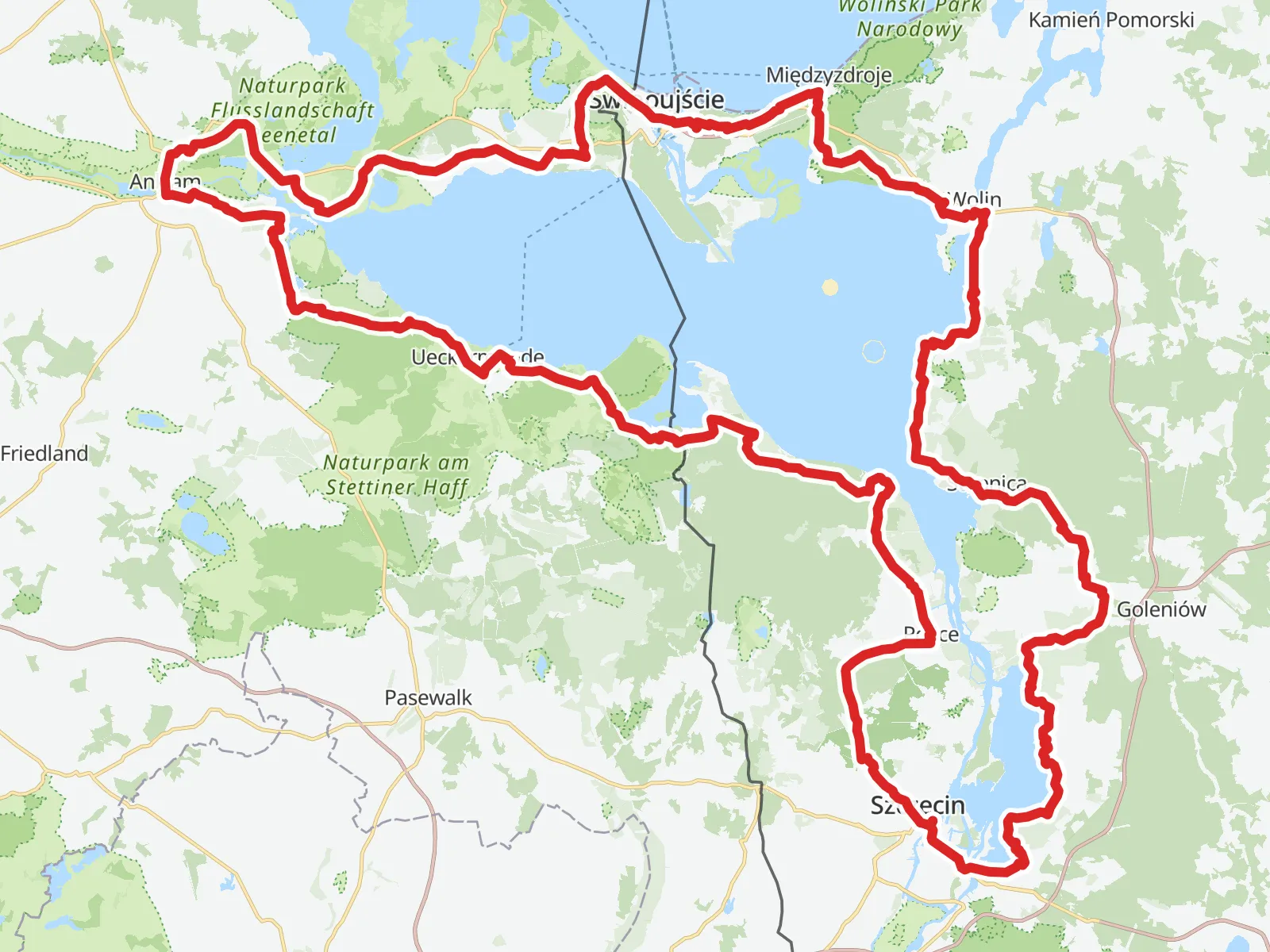
The Oder-Neisse Trail is an international cycling route running along one of Europe's longest natural borders. The trail begins at the source of the Lusatian Neisse in the Czech town of Nová Ves nad Nisou and ends at the Baltic Sea near Świnoujście. Along the way, you pass charming towns, historic bridges and nature reserves across three countries: Czechia, Germany and Poland.

This route suits first-time multi-day cyclists well. The trail features outstanding cycling infrastructure, good rail connections and separation from motor traffic. The predominance of asphalt surfaces and long straight sections make this route ideal for achieving a personal distance record. The elevation difference along the trail is significant, dropping from over 600 metres above sea level at the mountainous start down to sea level at the Oder estuary.
Essential Route Information
- Difficulty level: easy to moderate (mountainous section in Czechia, flat thereafter)
- Elevation profile: initial mountain section with several descents, then flat terrain all the way to the sea
- Surface: predominantly asphalt, occasional cobblestones in town centres, gravel sections in the final part
- Route type: mainly dedicated cycle paths and local roads separated from motor traffic
- Recommended direction: from source to sea (mostly downhill in the mountain section)
- Recommended bike: any bike type due to the asphalt surface; road bikes possible with modifications on the final section
Route Marking & Navigation
Trail marking varies by country. In Czechia, the route shares its course with route number 20. Look for rectangular orange signs with a bicycle logo and the number 20; directional changes are indicated by arrows on the signs. Near Liberec, the Oder-Neisse logo also appears on the markers.
The German section features traditional white signs with green directional arrows. Every junction has signposts showing distances to the nearest and larger towns along the trail, with trail pictogram signs below. Note that in both Czechia and Germany, there are no signposts to attractions near the trail, so using maps and navigation apps is recommended.
Best Direction & Season
The recommended direction is from the Neisse source to the sea. Prevailing westerly winds have little impact on direction choice, as they typically blow from the side. However, much of the trail passes through treeless areas, making occasional headwinds particularly noticeable. Starting from the source means enjoying several long descents in the Czech mountain section, whereas riding the opposite direction would involve strenuous climbs. Finishing in Świnoujście also makes buying a return ticket easier, as you won't be competing for spaces with cyclists starting their journey on the EuroVelo 10/13 trail.
- Spring (May-June): moderate weather, blooming nature, lower tourist numbers
- Early autumn (September-October): colourful landscapes, pleasant temperatures, fewer tourists
- Summer (July-August): potential heat waves, which can be tiring given the low forest cover along the route

Stages & Route Overview
The suggested time to complete the entire trail is 10 to 12 days, with the route dividable into approximately 12 stages. Many people choose to start from Zgorzelec, skipping the initial section. However, riding the entire trail is worthwhile, as the section before Zgorzelec is among the most interesting, featuring Lake Berzdorfer, St. Marienthal Monastery and an exceptional path running right alongside the Neisse.
The Czech section begins in Nová Ves nad Nisou. The mountain segments are manageable, as descents dominate. There are only three climbs: two with moderate gradients before Zgorzelec and one gentler one near Hamerstejn. The trail passes through the centres of Jablonec nad Nisou and Liberec, weaving through local streets and offering frequent contact with the Lusatian Neisse.
The German section is typically flat and passes through Saxony, Brandenburg and Mecklenburg-Vorpommern. Infrastructure here is excellently developed. The most monotonous stretch lies between Gubin and Hohenstadt, so consider splitting the trail into two trips with a connecting point in Kostrzyn.

Key Attractions Along the Route
Travelling along the Oder-Neisse Trail is not just a cycling adventure but also a journey through the history and nature of the three-country borderland. The route offers abundant monuments, picturesque landscapes and unique places worth visiting.
- Muskau Park: a UNESCO World Heritage Site, a stunning park complex with a castle
- Görlitz: historic architecture, one of the best-preserved old towns in Germany
- St. Marienthal Monastery: the oldest Cistercian nunnery in Germany, located right on the trail
- Lake Berzdorfer: an artificial reservoir created on the site of a former open-pit mine
- Saxon Switzerland: impressive rock formations, including the Schrammsteine and Bastei
- Königstein Fortress: one of the largest hilltop fortifications in Europe
- Eisenhüttenstadt: a unique town with preserved socialist realist architecture
- Siekierki: the longest crossing over the Oder
- Zecherin: a sunken forest, an extraordinary natural sight
- Bolesławiec: famous ceramics, perfect for souvenirs
Culinary Highlights
The Oder-Neisse Trail passes through regions with rich culinary traditions. On the Polish side, try regional pierogi, herb-seasoned trout and local fruit liqueurs. German cuisine tempts with meatballs in mushroom sauce, currywurst and regional gingerbread. Along the route, you'll find numerous eateries and beer gardens where you can rest and refuel. Also look out for self-service farm stands by fences, where you can find fresh vegetables and fruit for a small fee dropped into a box.
Accommodation Options
Accommodation infrastructure along the trail is well developed, though it varies significantly between countries. In Germany, you'll find a wide selection of hotels, guesthouses and campsites, though prices are higher. In Poland, prices are lower, but accommodation availability is more limited, with hardly any campsites at all. Booking ahead is advisable, especially during tourist season.
- Hotels and guesthouses: wide selection in Germany, limited in Poland
- Campsites: available mainly on the German side
- Wild camping: strictly forbidden in Saxony; permitted in Brandenburg and Mecklenburg for one night outside forests and nature reserves

Access & Transportation
Getting There
The best way to reach the trail's start is by train from Szklarska Poręba, then transferring to the Czech Jizera Mountains Railway to Lučany nad Nisou. From there, it's just a short ride south to the trail's beginning in Nová Ves nad Nisou. Timetables can be checked on the Czech Railways website.
Getting Back
Finishing in Świnoujście or Ueckermünde offers good rail connections. Bear in mind that starting your trip from Świnoujście means competing for train spaces with cyclists beginning their journey on the EuroVelo 10/13 trail, which starts at this location.
Practical Considerations
The trail passes through areas with low forest cover, comprising only 17% of the route. This means significant sun exposure during summer. Be sure to pack sunscreen. Despite running alongside rivers, swimming spots are scarce. River beaches are virtually non-existent, and wild swimming should be strictly avoided due to swift currents and treacherous riverbeds.
- Supplies: in Germany and Czechia, plan your shopping ahead as there are no small village shops; supermarkets are located on town outskirts
- Opening hours: shops in Czechia are open 7 days a week; in Germany, closed on Sundays
- For road bikes: consider modifying the final section due to gravel and concrete slabs; leave the trail at Hintersee and rejoin at Ueckermünde
- Currency: prepare for payments in euros (Germany, Czechia) and Polish złoty (Poland); not all places accept cards
Final Tips
The Oder-Neisse Trail is an excellent choice for both beginners seeking their first multi-day trip and families with children. Outstanding infrastructure, predominantly paved surfaces and separation from motor traffic guarantee a safe and comfortable journey. Consider splitting the route into two trips with a connecting point in Kostrzyn, which helps avoid monotony and allows you to better explore the cultural and natural richness of the borderland.
The trail connects with other popular cycling routes, including Velo Baltica at the Oder estuary, the EuroVelo 10/13 along the Baltic coast and Blue Velo near Kostrzyn nad Odrą. This opens up possibilities for planning longer, cross-border cycling adventures across Europe.
VeloPlanner is now on mobile!
Download our mobile app to explore cycling routes and plan your rides on the go.